
What Packing Materials Do Packers and Movers Use?
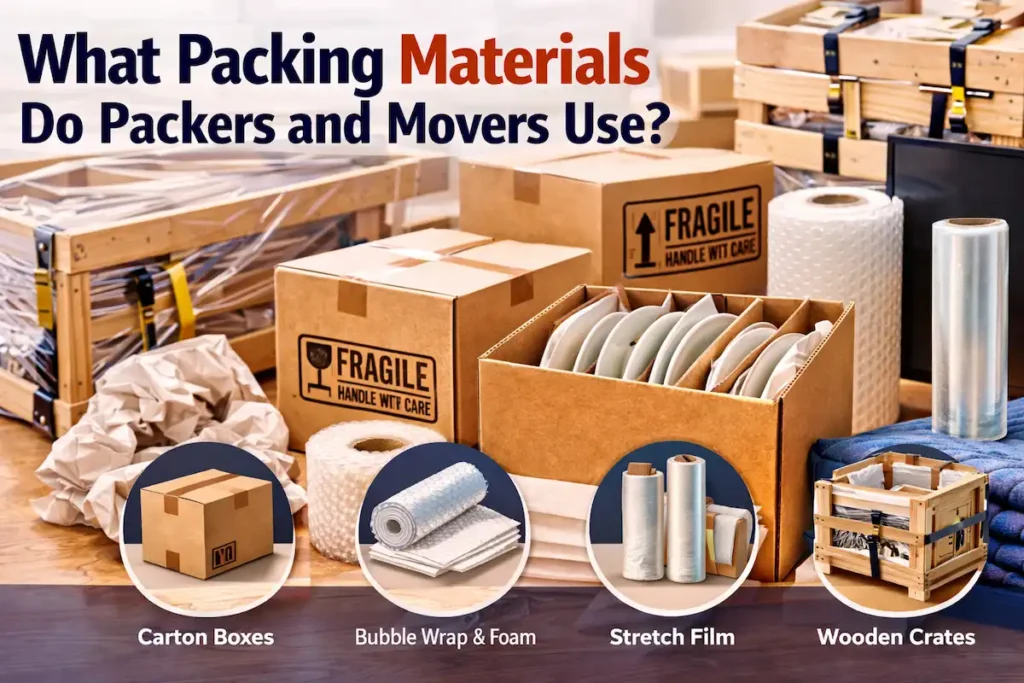
When you hire professional packers and movers in Lucknow, a large part of what you are paying for is the quality of the packing materials and the skill with which they are applied. A professional packing job uses specific materials for specific items — not a single solution for everything. The carton used for books is different from the carton used for a television. The wrapping for a glass dining table is different from the wrapping for a sofa.
This guide documents every major packing material that professional movers use, explains what each one does, and shows which items it is used for. Whether you want to understand what your mover should be bringing on packing day, or you are considering a partial DIY approach, this guide gives you the complete picture.
About Alliaance Packers And Movers: We have provided professional packing and shifting services from Lucknow since 2013. All packing materials we use are new for every job — sourced from verified suppliers, not reused from previous moves. For a free pre-move survey and written quote that includes all packing materials, call +91 7398073201.
Table of Contents
Why Packing Materials Matter More Than You Think
Most people assume that breakage during a move is caused by rough handling or a bad truck. In practice, the majority of damage in any relocation is caused directly by inadequate packing materials or incorrect application — not by the journey itself.
Consider three common failures: a plate packed flat in a box (rather than vertically on its edge) breaks under the weight above it even on a short local move. A television wrapped only in a moving blanket with no rigid box develops screen cracks from sustained vibration. A refrigerator moved without stretch film on its doors arrives with the door swinging open, damaging the internal shelves.
In all three cases, the right material — applied correctly — would have prevented the damage entirely. This is why distinguishing between professional-grade packing materials and inadequate substitutes matters before you book.
What separates professional-grade materials from inadequate substitutes
Professional Material | Inadequate Substitute | Why the Difference Matters |
Plain unprinted packing paper (newsprint) | Newspaper | Newspaper ink transfers onto dishes, glassware, and fine china — especially when paper becomes damp in transit. Professional movers never use newspaper. |
New corrugated carton boxes (3-ply or 5-ply) | Previously used boxes | Old boxes have weakened flaps and compressed walls — they can fail under weight, especially when carried on stairs. |
Bubble wrap (sealed air capsules) | Cloth or soft fabric alone | Fabric reduces scratches. Bubble wrap cushions against impact. For fragile items, both layers are needed. |
Stretch film / waterproof lamination | Domestic cling film | Stretch film is engineered to cling under sustained tension across transit. Domestic cling film tears under load. |
EPE foam sheets | Crumpled newspaper or tissue paper | EPE foam provides measured shock absorption. Newspaper provides minimal cushioning and transfers ink. |
Primary Packing Materials Used by Professional Packers and Movers
These are the core materials present in every professional packing job, regardless of move size or distance.
1. Corrugated Cardboard Boxes
The corrugated cardboard box is the most used packing material in any professional relocation. These are available in multiple sizes — from small boxes for books and crockery to large boxes for clothes and light bulky goods. Professional movers use new boxes for every job, never reused cartons.
Ply (thickness) matters: Professional packers select box thickness based on the weight and fragility of contents. Industry practice uses 3-ply for light items, 5-ply for medium household goods, and 7-ply for heavy or fragile items requiring maximum wall strength.
Box Type | Ply / Construction | Used For |
Standard carton (small) | 3-ply or 5-ply | Books, clothes, kitchen utensils, groceries, small decorative items |
Standard carton (medium) | 5-ply | Crockery, glassware, electronics, appliances, kitchenware |
Heavy-duty / double-corrugated | 7-ply or double-wall | Heavy items: cast iron cookware, tool collections, dense kitchen equipment |
TV / electronics box | 5-ply + foam lining | LCD, LED, OLED televisions, computer monitors |
Wardrobe box | 5-ply, tall with hanging rail | Clothes on hangers — eliminates folding and ironing at destination |
Specialist / custom-size | 5-ply or 7-ply to specification | Mirrors, artwork, large glass items, irregular-shaped items |
Monsoon note: For moves during June to September, professional movers use laminated or water-resistant corrugated boxes to protect against humidity and rain exposure during loading and unloading.
⚠ Inspect the boxes your mover brings before packing begins. New boxes have clean, uncompressed walls and intact flaps. Any box with a watermark ring, soft wall, or bent corner has been used before and should be rejected.
2. Bubble Wrap (Air Bubble Sheet)
Bubble wrap — called air bubble sheet in Indian moving terminology — is the most widely used cushioning material for fragile goods. It consists of plastic sheets with sealed air capsules that act as shock absorbers between the item and any external impact.
Professional movers use bubble wrap as a second layer of protection over packing paper. It is applied to crockery, glassware, television screens, mirrors, showpieces, frames, lamps, electronics, and any item where surface impact could cause breakage. The air capsules cushion against vibrations and jolts — particularly important on long-distance intercity moves.
Different bubble sizes serve different purposes: small-bubble wrap provides surface protection against scratches and light impacts; large-bubble wrap provides shock absorption for heavier, more fragile items like mirrors and large glass panels. Professional movers carry both grades.
💡 When packing fragile items yourself, bubble wrap should face inward — air bubbles against the item’s surface, smooth side facing outward. Secure with tape to the wrap, never directly to the item surface.
3. Packing Paper (Unprinted Newsprint)
Packing paper — plain, unprinted newsprint — is the first layer of protection used by professional packers on dishes, glassware, ceramics, and any item where the surface must be kept clean. It is commonly used as the primary layer because it is clean, does not leave marks, and can be crumpled to fill voids inside boxes.
Why not newspaper: Newspaper ink transfers onto dishes, glassware, and fine china — especially when the paper becomes slightly damp during transit or in humid conditions. Professional packers and movers do not use newspaper as packing material. Plain packing paper is inexpensive, available in clean white or brown varieties, and leaves no stains on any surface.
- Packing paper is crumpled and placed at the box bottom as a shock-absorbing base layer — typically 3–4 cm deep before any item is placed
- Each fragile item is wrapped individually in packing paper before bubble wrap or other secondary protection is added
- Crumpled packing paper fills all gaps in a packed box — preventing any internal movement during transit
- It does not scratch or stain surfaces, making it safe for use on lacquered furniture, ceramics, and painted items
4. Stretch Film (Waterproof Lamination)
Stretch film — also called waterproof lamination or elastic wrap in Indian moving terminology — is a highly stretchable, transparent plastic film that clings to itself when applied under tension. It serves several distinct functions in a professional packing operation.
Function | What Stretch Film Does |
Securing furniture | Wraps sofas, wardrobes, dining tables, and wooden furniture to prevent scratches, moisture, and dust during transport |
Locking moving parts | Drawers, cabinet doors, and refrigerator doors are wrapped with stretch film so they cannot open during loading, transport, or unloading |
Waterproofing | Applied as the outermost layer on carton boxes for long-distance or monsoon moves, creating a moisture barrier |
Mattress protection | Mattresses are wrapped in stretch film to keep them clean and dry throughout transit |
Bundle-wrapping | Groups of similar items — stacked chairs, bundled frames, stacked suitcases — are wrapped together for efficient loading |
Stretch film is standard on intercity and long-distance moves. For purely local moves within the same city, some movers use it selectively. Industry practice confirms that stretch film is applied as the outermost layer on carton boxes, mattresses, suitcases, chairs, and wooden furniture for all long-distance shifting operations.
5. EPE Foam Sheets (Expanded Polyethylene Foam)
EPE foam sheets — Expanded Polyethylene foam — are lightweight, flexible, closed-cell foam sheets available in thicknesses from 1 mm to 12 mm. They provide uniform shock absorption and surface protection across their entire area, making them the material of choice for appliances, furniture surfaces, and large flat glass panels.
Unlike bubble wrap, which protects specifically at the air capsule locations, EPE foam sheets provide protection uniformly across their whole surface. This makes them particularly suitable for large flat surfaces — refrigerator panels, washing machine exteriors, wardrobe sides — and for lining the inside of boxes before placing fragile items.
EPE Foam Application | What It Protects |
Lining box interior | Provides a cushioned base and wall layer inside carton boxes for electronics and crockery |
Furniture surfaces | Wrapped around refrigerators, washing machines, TV panels, and wardrobe surfaces to prevent scratches and dents during loading |
Staircase carries | Placed on furniture corners to protect walls and door frames during narrow-passage movement |
Glass panels | Placed flat against glass tabletops, mirror surfaces, and glass cabinet doors before bubble wrap wrapping |
Specialist Packing Materials for Specific Items
Beyond the primary materials used on every job, professional movers carry specialist materials for specific item categories. These are what distinguish an experienced crew from an inexperienced one.
6. Thermocol (Expanded Polystyrene / EPS)
Thermocol — expanded polystyrene — is a rigid foam board used primarily to protect electronics and electrical appliances from shock, friction, and weather exposure during transit. It is the same material used inside original factory packaging of televisions, refrigerators, air conditioners, and washing machines — the white rigid inserts that hold the appliance in position inside its box.
Professional movers bring thermocol sheets in thicknesses from 1 inch to 5 inch and position them to fit the electronics being packed. Thermocol protects items from both physical shock and external weather conditions, making it suitable for LED televisions, music systems, inverters, and other electronics that cannot tolerate vibration or moisture.
- Thermocol is used as corner protectors inside electronics boxes
- It lines the inside of carton boxes for fragile electronics where original factory foam inserts are not available
- Rigid thermocol panels are placed against large flat surfaces — LED screen backs, compressor panels — before outer wrapping
7. Corrugated Sheets (Flat Rolls or Panels)
Corrugated sheets are the flat, ribbed cardboard material in rolls or flat panels — distinct from assembled carton boxes. Professional movers use them for applications where a box is impractical: wrapping, layering, and providing rigid surface protection.
- Placed between stacked plates and dishes as rigid separators — stronger than packing paper alone
- Wrapped around furniture legs, table corners, and sofa arms before stretch film is applied
- Used to line the floor of the moving truck in loading areas where heavy boxes will be stacked
- Wrapped around large appliances for corner and edge protection before blanket and stretch film layers
The Indian moving industry uses corrugated sheets extensively as a cost-effective rigid protection layer between items and for cushioning heavy appliances. Market pricing for corrugated sheet in India is approximately ₹58–₹100 per kg depending on grade and thickness.
8. Furniture Blankets / Moving Blankets
Furniture blankets are thick, padded moving blankets used to protect large furniture items, appliances, and any goods too large for a standard carton box. They provide surface protection against scratches, dents, and abrasion — particularly during loading, staircase carries, and truck loading sequences.
Furniture blankets are draped over sofas, wardrobes, dining tables, refrigerators, and washing machines before stretch film is applied over the blanket to hold it in place. The blanket prevents direct contact between the stretch film and furniture surfaces, which is important for upholstered items and lacquered wood where film adhesion could leave marks.
9. Wooden Crates (Custom-Built)
Wooden crates represent the highest level of packing protection available in professional moving. They are custom-built frames sized to the specific dimensions of the item being transported. They are used for items where standard carton boxing is insufficient: oversized mirrors, large glass panels, original artwork, antiques, marble tabletops, and any high-value item requiring maximum rigidity.
The process: items are first packed completely in bubble wrap, EPE foam, and corrugated sheets. They are then placed inside the wooden crate, which provides a rigid, crush-proof outer shell. Professional movers who handle high-value or fragile specialty items maintain the capacity to build these crates to order. For added security on intercity moves, numbered seals can be applied to crate fastenings — if a seal is broken on arrival, tampering during transit is immediately visible.
⚠ If a mover quotes for moving an antique, large mirror, marble tabletop, or original artwork and does not mention wooden crating, ask specifically how these items will be protected. A single corrugated box is not adequate for these categories.
10. PP Straps and Nylon Rope
PP (polypropylene) straps are plastic binding bands applied around the outside of heavy carton boxes — preventing the box from opening under pressure if tape fails, and adding structural reinforcement against box collapse. They are a secondary line of defence after BOPP tape sealing.
- PP straps are applied as a reinforcing band around heavy carton boxes over the sealed flaps
- Nylon rope is used to secure stacked goods inside the truck — tied across the load to prevent shifting during braking
- For wooden crates carrying high-value goods, numbered tamper seals applied to fastenings allow tamper detection at delivery
11. Waterproof Tape (BOPP Tape)
Professional movers use BOPP (Biaxially Oriented Polypropylene) tape for sealing carton boxes — not standard office adhesive tape. BOPP tape has the adhesion strength to hold corrugated flaps closed under stacking weight, staircase friction, and road vibration. A minimum of three strips are applied to the top and bottom of every carton box: one down the centre seam and one on each side edge.
Permanent markers — used in multiple colours — label every carton with its contents, destination room, fragility status, and orientation (This Side Up). Industry practice marks products outside cartons room-by-room, item-by-item, with fragile products clearly identified so handling staff exercise appropriate care throughout the move.
Which Packing Material Is Used for Which Item?
Professional movers do not use a single material for everything. The correct material is selected based on the item’s weight, fragility, surface type, and the distance of the move. The table below is the industry-standard material assignment by item category, compiled from professional moving industry practice.
Item Category | Primary Materials Used | Secondary / Outer Materials |
Plates and crockery | Packing paper (first wrap) + bubble wrap (second wrap) + cardboard dividers inside box | 5-ply corrugated carton; label FRAGILE THIS SIDE UP |
Glassware and stemware | Packing paper fill inside glass + bubble wrap + cell dividers | 5-ply carton; never stack above 2 layers |
LED / LCD / OLED TV | Moving blanket + 2–3 layers bubble wrap + thermocol corner protectors | TV-specific corrugated box; transported upright only, never flat |
Refrigerator | EPE foam sheets on panels + furniture blanket | Stretch film to lock doors; transported upright always |
Washing machine | EPE foam on drum + furniture blanket | Stretch film to seal lid; transit bolts reinstated if available; transported upright |
Sofa and upholstered furniture | Furniture blanket over all surfaces | Stretch film over blanket to hold in place and repel dust |
Wooden furniture (wardrobe, table) | Corrugated sheet on corners + furniture blanket | Stretch film outer layer; drawers locked with stretch wrap |
Mirrors and large glass panels | X-tape on glass face + 2 layers EPE foam + 2 layers bubble wrap | Wooden crate for large/valuable mirrors; specialist flat carton for smaller; UPRIGHT ONLY |
Original artwork and antiques | Packing paper + bubble wrap + EPE foam on all surfaces | Custom wooden crate; individually loaded last, unloaded first |
Electronics (laptop, desktop) | Anti-static bubble wrap + EPE foam inside snug box | 5-ply corrugated carton; original factory box preferred if available |
Books and documents | Packing paper between layers; packed flat | Small 3-ply carton; boxes kept under 20 kg — books are dense |
Clothes and linen | Wardrobe boxes (on hangers) or standard carton | Stretch film outer for long-distance moisture protection |
Kitchen appliances (microwave, mixer) | EPE foam on all sides + bubble wrap on corners | 5-ply corrugated carton; cables bagged and labelled separately |
Bikes and two-wheelers | Bubble wrap on painted parts + corrugated sheet + foam sheets | Stretch film outer layer; wooden crate for long-distance road or rail shipping |
How to Verify Your Mover Is Using the Right Materials
The quality of packing materials directly affects the safety of your goods and the cost of your move. A mover who uses thin single-ply boxes, reused cartons, and minimal bubble wrap will quote lower. A mover who uses 5-ply new boxes, EPE foam, and stretch film on every piece of furniture will quote higher. Understanding this trade-off before booking prevents unpleasant surprises at delivery.
Questions to ask your mover before booking
- Are the carton boxes new or reused from previous moves?
- What ply of corrugated box is used for electronics and heavy items?
- Is bubble wrap applied to all crockery and glassware individually, or only to selected items?
- Is stretch film included in the quote for furniture wrapping?
- For a flat-screen TV: do you use a TV-specific box or just blankets?
- For any mirrors or large glass items: will you use a wooden crate or a specialist flat pack?
- Are all packing materials included in the quoted price, or charged separately on moving day?
What good packing looks like on the day
You Should See | If You See This Instead — Ask Why |
New carton boxes with clean, uncompressed walls and intact flaps | Previously used boxes with watermarks, soft corners, or bent flaps |
Each fragile item individually wrapped in packing paper before box placement | Multiple items placed in a box with a single layer of paper between them |
Bubble wrap secured with tape to the wrap surface, not to the item itself | Tape applied directly to TV screens, picture frames, or lacquered furniture surfaces |
Crockery packed vertically on edge in the box — not stacked flat | Plates stacked flat with only tissue paper between them |
Every box gap filled with crumpled packing paper before sealing | Boxes sealed with empty space inside that shifts when the box is shaken |
FRAGILE and THIS SIDE UP on multiple sides of every fragile carton | Single label on top only, or unlabelled fragile boxes |
Furniture wrapped in blankets before stretch film is applied | Stretch film applied directly onto sofa fabric or wooden surfaces without blanket first |
⚠ A mover who reuses old boxes, skips bubble wrap on crockery, or packs a TV in a blanket without a rigid box is cutting corners on materials. This reduces their cost and increases your risk. Inspect the materials before packing begins — not after goods arrive damaged.
What Packing Materials Alliaance Packers And Movers Uses on Every Job
Alliaance Packers And Movers has operated in Lucknow since 2013. Every packing job — local or intercity — uses new materials sourced from verified suppliers. Here is the complete material inventory for an Alliaance packing job:
Material | What Alliaance Uses It For | Alliaance Standard |
Corrugated carton boxes | All boxable household items | New boxes only. 3-ply for light items. 5-ply for crockery and electronics. 7-ply available for heavy or fragile items. |
Bubble wrap (air bubble sheet) | All fragile items: crockery, glassware, TVs, mirrors, showpieces, frames | Applied as second layer over packing paper. Two layers for all high-value fragile items. |
Packing paper (unprinted newsprint) | All crockery, glassware, and ceramics | First layer, wrapped individually per item. Crumpled fill for all box gaps. No newspaper used. |
Stretch film / waterproof lamination | All furniture, mattresses, suitcases, carton boxes on intercity moves | Standard on all intercity moves. Applied over furniture blankets, not directly onto surfaces. |
EPE foam sheets | Appliances, large furniture surfaces, box lining | Multiple thicknesses available. Used for refrigerators, washing machines, and all large flat surfaces. |
Thermocol | Electronics: LED/LCD TVs, music systems, inverters | Positioned inside electronics boxes as corner and surface protectors. |
Corrugated sheets (flat) | Plate dividers, furniture corner protection, truck floor lining | Used between crockery stacks and on all furniture corners before blanket wrapping. |
Furniture / moving blankets | Sofas, wardrobes, dining tables, appliances | Applied before stretch film. Prevents direct film contact with furniture surfaces. |
Wooden crates | Large mirrors, antiques, original artwork, marble tops | Custom-built per item dimensions. Items wrapped completely in foam and bubble before crating. |
PP straps and nylon rope | Reinforcing heavy carton boxes; securing truck load | Standard on all intercity moves. Applied over sealed heavy cartons as external reinforcement. |
BOPP packing tape + permanent markers | Sealing all boxes; labelling contents, room, fragility, orientation | 3 strips minimum per box (top and bottom seams). All boxes labelled before loading begins. |
All Alliaance packing materials are included in the written fixed quote — confirmed after a free pre-move survey at your Lucknow address. No separate packing material charges are added on moving day.
Get a Free Quote in 30 Seconds!
Tell us your move details and our team will call you back within 15 minutes — 7 days a week.
“Pay only 10% on delivery — after you are satisfied”
✅ No spam · No hidden charges · Call within 15 mins
🔒 Your information is 100% safe and never shared
⭐ 800+ families trust Alliaance Packers And Movers
📞 Prefer to call?
Frequently Asked Questions
The core materials used by professional packers and movers are: corrugated cardboard boxes (3-ply, 5-ply, and 7-ply), bubble wrap (air bubble sheet), plain packing paper (unprinted newsprint), stretch film (waterproof lamination), EPE foam sheets, thermocol for electronics, furniture blankets, corrugated flat sheets, PP straps, and BOPP packing tape. For high-value or oversized fragile items, custom wooden crates are built to the item's dimensions.
This varies by company and must be confirmed in writing before booking. At Alliaance Packers And Movers, all packing materials — including bubble wrap, corrugated boxes, EPE foam, stretch film, and furniture blankets — are included in the written fixed quote. There are no separate material charges added on moving day. Always ask for a quote that lists materials explicitly.
Professional movers wrap a flat-screen TV in a moving blanket, then apply 2–3 layers of bubble wrap. Thermocol corner protectors are placed on all four corners. The TV is then placed in a TV-specific corrugated box with EPE foam filling all gaps. The box is always transported upright — never flat. Laying a flat-screen TV flat creates centre-screen pressure that can crack LCD and OLED panels during vibration.
No. Professional packers and movers do not use newspaper to wrap dishes, glassware, or any household goods. Newspaper ink transfers onto crockery surfaces — particularly when the paper becomes slightly damp during transit — and is difficult to remove. The correct material is plain, unprinted packing paper (newsprint), which is clean and leaves no stains on any surface.
Large furniture items are wrapped in furniture blankets to protect all surfaces. Stretch film is then applied over the blanket to hold it in position and provide a waterproof outer layer. Corrugated flat sheets are placed on corners and edges before the blanket layer. Drawers and cabinet doors are locked closed with stretch film so they cannot open during transit.
Wooden crates are used for items where no standard carton box provides adequate protection: large mirrors, original artwork, antiques, marble tabletops, large glass panels, and glass dining table tops. The item is packed completely in bubble wrap and EPE foam first, then placed inside a custom-built wooden crate sized to its dimensions. Wooden crating adds cost but provides rigid protection that no carton can replicate for irreplaceable items.
For standard fragile items — crockery, glassware, showpieces — one layer of packing paper plus one layer of bubble wrap is the professional standard. For high-value, heavier, or particularly fragile items such as TV screens, large glass, or fine china, two layers of bubble wrap are applied. For long-distance intercity moves, EPE foam is added as an additional protection layer. Ask your mover how many layers they apply to your specific fragile items before confirming the booking.
Ready to Move with a Verified Scam-Free Mover in Lucknow?
Every scam pattern in this guide has a verifiable counter at Alliaance Packers And Movers. Our payment structure, documentation practices, and transparent processes are designed to make fraud structurally impossible.